Tantra
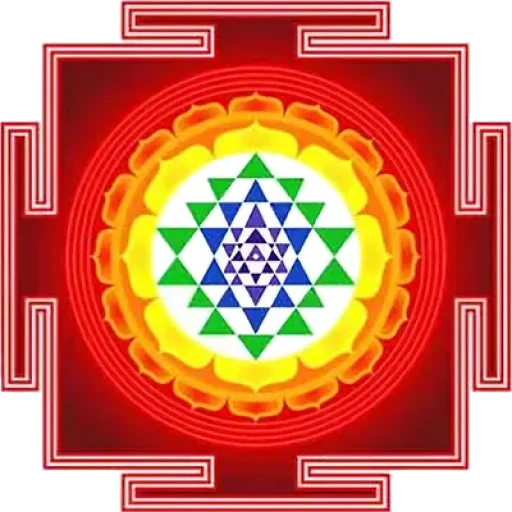
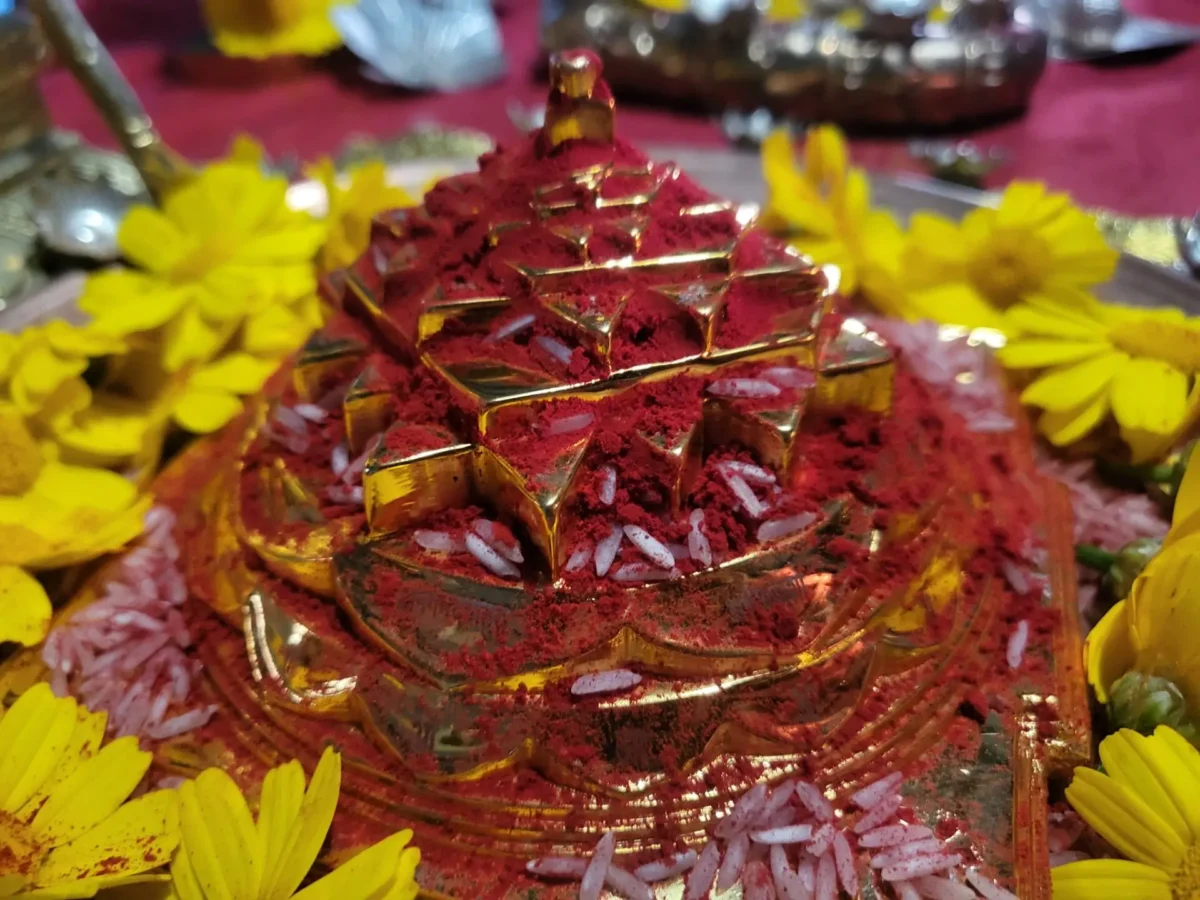
Tantra is a very advanced technology of consciousness development. This ancient, deep and highly potent method is considered the fastest Path to self-realization. It consists of mantras, yantras–geometric diagrams, Pujas, Yagyas and mudras–specific finger positions. Of all the above, mantra is the most important. For a serious practitioner of Tantra, mantra japa meditation is the main tool for awakening Kundalini Shakti and for self-realization.
Tantra, as a primordial practice, due to its intensity has always been kept as secret knowledge that was transmitted orally. For this reason, it is not known exactly when it was created. The first records of Tantra were around the 8th century, in Kashmir, India. Along the way, several different traditions-sampradayas were created, each with its own methods, which have been preserved to this day.
The word “Tantra” consists of two words, “tan” and “trayate”. “Tan” means development, liberation, while “trayate” means instrument, technology. Tantra is a technology for the development and liberation of human consciousness.
There are several different types of Tantra, the most potent of which is Shakti Tantra. Tonči and Ana were initiated into Shakti Tantra, the Mahavidya system (Maha–great, Vidya–knowledge, wisdom). There are 10 cosmic, primordial forces that represent different aspects of Shakti (the energy of manifestation) and intuitive spiritual understanding. This system of knowledge is therefore called Dasha Mahavidyas (Dasha–10).
They are:
- Kali-Shakti which dissolves ego structure, illusion and leads to spiritual liberation
- Tara-Shakti which protects and guides the practitioner across the ocean of samsara (illusion) and leads to spiritual liberation
- Tripura Sundari-beauty, consciousness, love, bliss, prosperity. A Shakti that integrates all aspects of the great Shakti and has the power to lead the practitioner to non-dual consciousness (advaita) and spiritual liberation
- Bhuvaneshvari-symbolizes space without any boundaries and full potential
- Bhairavi-Shakti that brings intense purification and deep, powerful sadhana
- Chhinnamasta-Shakti, which destroys ignorance in the practitioner, also symbolizes sacrifice in the fire of tapasya (intensive practice-sadhana).
- Dhumavati-symbolizes emptiness, teaches the practitioner detachment and transcendence
- Bhagalamukhi-stability and control, its siddhi (perfection) is stambhana, stopping all negativity, both in the practitioner and in external life
- Matangi-Shakti that governs speech and creativity
- Mahalaxmi (Kamala)-spiritual and material abundance, grace, emotional fullness
This is a brief overview of all the Mahavidyas and their functions. There is much more that can be said about each of them. Each Mahavidya has its own associated mantras and Pujas that contain their energy.
An indispensable and important part of Shakti Tantra is Kamakhya, which does not strictly belong to the Mahavidya family. The oldest and most potent Shakti place (pitha) in India is Kamakhya. Many sampradayas consider Kamakhya to be the source of all the Mahavidyas because it symbolizes the very womb of Creation.
For Moksha (spiritual liberation), Kali, Tara, Tripura Sundari and Kamakhya are most commonly used.
For a complete and integrated consciousness on all levels of existence, within this sampradaya, the practitioner goes through a process of several Mahavidyas.
All these cosmic forces, in their dormant state, are found within the human body. Each of these 10 processes has enormous potential for awakening Kundalini Shakti and has its own unique effect on the body, mind, awakening of dormant abilities of the meditator and on his manifest life.
Bhola Babaji initiated Tonči into 3 Mahavidyas and into Kamakhya Tantra. These are Mahalaxmi, Kali and Tripura Sundari (Sri Vidya-Hadi system). With these 4 processes, it is possible, with daily mantra japa meditation, to disintegrate all negative karma, fully awaken Kundalini Shakti within the body, which leads to the complete integration of consciousness and energy, Shiva and Shakti.
These processes encompass all 4 Purushartas, the pillars of human existence. The Purushartas are: Dharma (moral and purposeful way of life that contributes to a higher order within Creation), Artha (material prosperity), Kama (fulfillment of sensual and other desires that are in accordance with the principles of Dharma) and Mukti or Moksha (spiritual liberation).
Tonči will give initiations into these same processes to others, after gaining adhara (strength and stability of mind and body) which comes through the process of mantra japa meditation with Om Namah Shivaya and Mahamrityunjaya mantras. The order of initiations is precisely determined (krama) and has its own energetic wisdom, therefore initiations cannot be skipped. With each initiation into the mantra, the practitioner also receives the knowledge of Puja.
An integral part of Tantra, as well as any other spiritual process, is seva, a certain form of service, help, to this planet, to people, animals, plants…
In this way, the powerful energy generated through mantra japa finds its external expression. Thus, the circle closes and the soul is complete.
Shiva Shakti Tantra in this original form is intended for all those who long for an authentic and powerful process that brings a deep inner transformation, for those who want to free themselves from their fears, transcend the mind and touch the core of existence. Tantra is for those who are ready to dedicate some time, every day, to mantra japa meditation. Despite the fact that Tantra is potent, without disciplined practice nothing will happen. Shakti remains dormant, karma and fears petrified in our energy body and life is an emotional reaction to the river of events we encounter.
As can be concluded from all of the above, Tantra is an initiation process in which the practitioner goes through a series of initiations, each deeper and more subtle than the previous one. As intense as the process is, it is lifelong, and requires experienced guidance where the teacher and student must resonate with each other.
Considering everything, before deciding to embark on such a profound journey, it is wise and necessary to think and examine one’s original intentions and aspirations. In addition, it is necessary to see if there is trust and resonance with the energy of Tonči and Ana. Likewise, they themselves will assess whether there is fertile ground and pure intention of the potential practitioner for receiving knowledge.
The first step in this direction is to come to Shiva pujas, which are open to the public, where one can feel the depth of this Path.